7 Simple Ways to Create Impactful Bulletin Boards Without Last-Minute Stress
Seven practical strategies teachers can use to create impactful bulletin boards that highlight authentic student work, growth, and thoughtful classroom instruction.
7/16/20262 min read
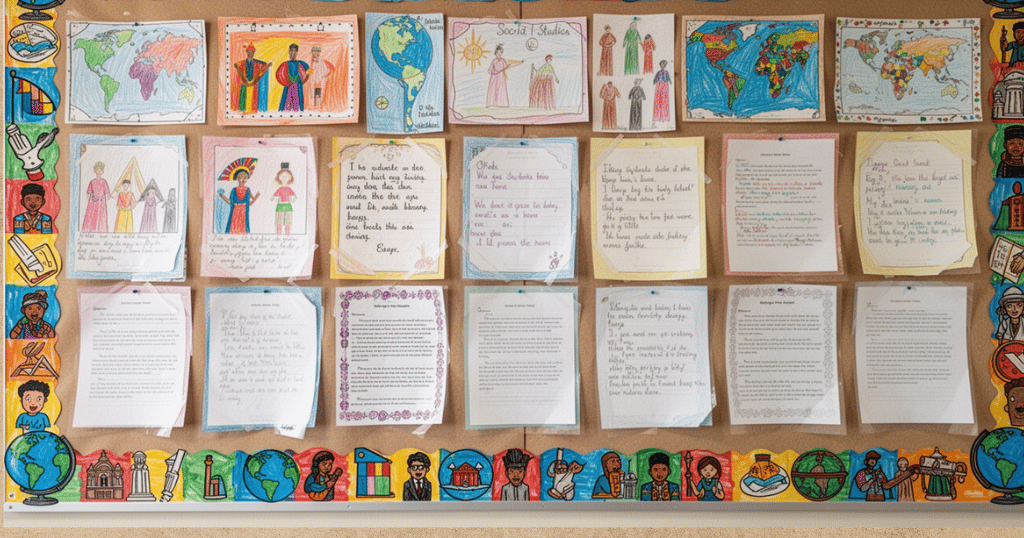
Every teacher has experienced that moment when an administrator or an influential visitor is scheduled to walk through the school, and suddenly, everyone looks at the bulletin boards. Are they full? Do they reflect learning? Are they current? It can be tempting to recycle old work, change dates, or quickly post only the strongest pieces. However, with a few intentional habits, bulletin boards can become authentic displays of learning rather than last-minute decorations.
Speaking from experience, I’ve learned that a well-planned board can quietly communicate the story of your classroom instruction.
1. Start Saving Student Work Early
One of the easiest strategies is to collect student work throughout the unit, not just at the end. I often keep a folder labeled Display Candidates where I place homework samples, early drafts, and thoughtful responses.
These pieces help show visitors that learning develops over time.
2. Display Drafts and Revisions
Visitors often appreciate seeing growth rather than perfection. When possible, I post a student’s first draft next to the revised version.
Research on formative assessment by Black & Wiliam (1998) shows that feedback and revision significantly improve student learning. When revision is visible, the bulletin board becomes a teaching tool.
3. Represent the Whole Class
It is important not to display only the most outstanding work. A classroom display should reflect different levels of student progress.
Education researcher Carol Ann Tomlinson emphasizes that differentiated classrooms value varied levels of learning. Showing work from a range of students communicates that improvement and effort are recognized.
4. Add Rubrics and Constructive Feedback
Posting rubrics beside assignments makes the display more meaningful. Instead of subjective comments like “Great job,” visitors can see clear academic criteria.
For example, a writing rubric may include:
Organization
Evidence
Vocabulary
Clarity of ideas
This approach aligns with standards-based instruction and demonstrates how student work is evaluated.
5. Diversify Assignment Formats
Not all students demonstrate learning in the same way. Some express ideas best through artwork, poetry, diagrams, essays, or creative responses.
The Universal Design for Learning (UDL) framework, developed by CAST, encourages providing multiple ways for students to show understanding. A display that includes different formats shows that student voice and creativity are valued.
6. Use Decorations That Align With the Subject
Decorations can enhance a board when they connect to the lesson or topic. For example, a science display might include diagrams or vocabulary visuals, while a history display might include timelines or maps.
However, effective boards avoid becoming a cornucopia of random colors and unrelated decorations. Purposeful visuals that match the content make the board look thoughtful and instructional rather than cluttered.
7. Keep Displays Organized and Unique
Neat and well-organized displays send an important message about the classroom environment. Even simple elements like consistent borders, clear headings, and balanced spacing can make student work stand out.
Unique presentations—such as grouping work by theme, showing learning steps, or highlighting student reflections—help the board tell the lesson's story.
Final Thought
A strong bulletin board should reflect learning, growth, and thoughtful instruction. When teachers save work early, include revisions, use rubrics, and organize displays with purpose, the board becomes more than decoration—it becomes visible evidence of student thinking. More insight can be gleaned in the article: How to Create Bulletin Board Material That Captures Attention and Drives Engagement .
And when visitors arrive, the display naturally shows what matters most: authentic learning in progress.
An organized display of student artwork and writing that highlights learning across subjects.