8 Research-Backed Ways Tutoring Helps High School Students Succeed on State Exams
Preparing for state exams can be stressful for both students and parents. Learn eight research-backed ways tutoring can help high school students build confidence, reduce test anxiety, close learning gaps, and succeed on high-stakes exams.
3/8/20264 min read


Sunday night, and the kitchen table feels like a battlefield. Your high schooler is staring at a practice test for state exams, and the pressure is building. You want to help, but high school math has changed since we were kids, and test prep can feel overwhelming.
If you’re feeling anxious about upcoming state exams, you’re not alone. These high-stakes tests can influence graduation or college placement. That’s where a tutor can make a real difference.
Here are eight research-backed ways tutoring can help your student succeed:
1. Bridging the “Pandemic Gap.”
Educational research consistently shows that personalized instruction is one of the most effective ways to recover lost learning. Tutors can quickly identify the foundational skills a student may have missed—like a key Algebra I concept—that are now making the state exam feel impossible. The National Center for Education Statistics notes that learning recovery and targeted academic support have become critical priorities for students after pandemic-related disruptions. You can learn more about learning recovery from the National Center for Education Statistics: https://nces.ed.gov
2. Mastering “Test-Speak.”
State exams have a language of their own. Research into test-wise strategies shows that students perform better when they understand the structure of the exam—not just the content. A tutor can teach students how to interpret complex wording, recognize question patterns, and eliminate distractor answers. Research from the Educational Testing Service highlights how familiarity with test structure and strategies can improve student performance. Learn more about assessment strategies here: https://www.ets.org
3. Reducing Academic Anxiety
The “brain freeze” students sometimes experience during tests is very real. Neuroscience research shows that when stress levels rise, the brain’s emotional center—the amygdala—can interfere with the logical thinking needed for problem solving. Studies from the Stanford University School of Medicine explain how stress responses in the brain can disrupt cognitive processes involved in learning and reasoning. Consistent tutoring helps students build academic confidence so they walk into exams feeling prepared rather than overwhelmed. Learn more about the brain and learning research here: https://med.stanford.edu
4. Focused Time Management
Standardized tests are also a race against the clock. Tutors often run timed practice sessions, helping students learn how to pace themselves and manage time wisely. Students who practice under test-like conditions tend to feel more comfortable during the real exam and are less likely to rush through questions or leave answers blank.
5. Instant Feedback Loops
In a classroom of thirty students, mistakes may not be caught until homework is graded days later. Tutors provide immediate feedback, allowing students to correct misunderstandings right away. Education research consistently shows that quick feedback is one of the most powerful tools for improving learning and strengthening skills.
6. Personalized Learning Styles
Every student processes information differently. While teachers often teach to the middle of the class, tutors can adapt their approach. Whether your child benefits from diagrams, step-by-step explanations, or talking through a problem, tutoring allows instruction to match the student’s learning style.
7. Strategic Goal Setting
Vague goals like “I just want to pass” rarely lead to success. Tutors help students set SMART goals—Specific, Measurable, Achievable, Relevant, and Time-bound. Breaking exam preparation into smaller milestones keeps students motivated and focused.
8. Accountability Without the Conflict
Let’s be honest: sometimes it’s hard for students to hear academic advice from Mom or Dad. A tutor provides a neutral support system, helping students stay accountable while keeping the home environment supportive rather than stressful.
Free Tutoring Options to Consider
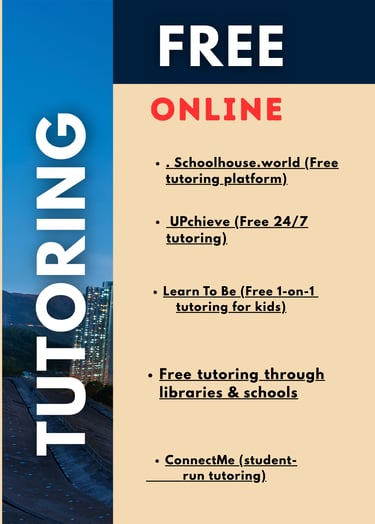
While paid tutoring services can be highly effective, it’s important to know that there are also free tutoring resources available for families who need support. Many of these platforms offer virtual help, homework assistance, and even one-on-one tutoring sessions.
Here are a few trusted free options:
Khan Academy – Offers free lessons, practice exercises, and videos in math, science, and more.
Schoolhouse.world – A free tutoring platform (created by Khan Academy’s founder) that connects students with live peer tutors.
Learn to Be – Provides free one-on-one online tutoring for students who qualify.
Varsity Tutors (Free Resources Section) – Includes free practice tests, live classes, and study materials.
CK-12 Foundation – Offers free textbooks, interactive lessons, and adaptive practice.
These resources can be a great starting point, especially when used consistently alongside classroom learning.
The Bottom Line
Investing in tutoring isn’t just about improving a test score—it’s about giving your child the tools to manage pressure, build confidence, and strengthen their learning habits. When the state exam arrives, they won’t just be ready—they’ll feel capable.
Call to Action
If your child is preparing for upcoming state exams, consider exploring tutoring support sooner rather than later. Even a few focused sessions can build confidence and close learning gaps.
If you are exploring tutoring support, many families begin by looking at reputable organizations that specialize in academic tutoring and test preparation.
Some well-known services include:
Kumon
Sylvan Learning
Varsity Tutors
Each offers different tutoring styles, from structured math programs to personalized online tutoring sessions. Visiting their websites can help parents compare approaches and decide what might work best for their child.
Note: The tutoring organizations mentioned are provided as general resources for parents. This article is not sponsored, and no affiliate links are used.
Student in free online tutoring class