
8 Smarter Ways to Enjoy Manicures (Without Ignoring the Science)
Enjoy your manicures with confidence—without ignoring what matters. This guide breaks down 8 simple, research-backed ways to create a safer nail routine, from choosing well-ventilated salons to understanding ingredients and protecting your skin. Learn how small changes can reduce exposure while still keeping your self-care routine intact.
5/3/20263 min read
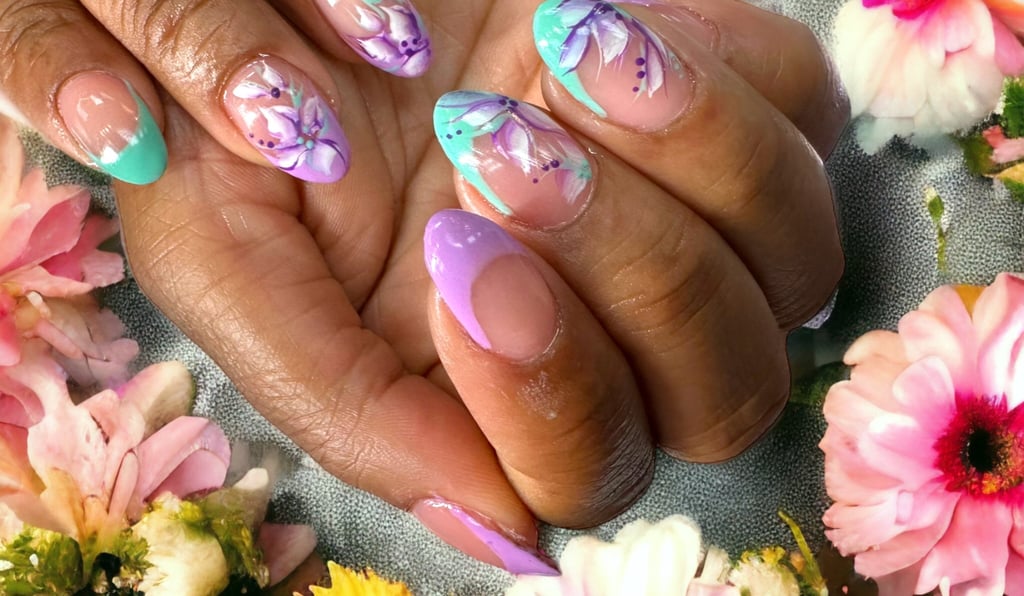
Let’s be real manicures feel good. They’re relaxing, boost confidence, and for many people, they’re part of a regular self-care routine.
But as the beauty industry grows, more people are asking: What’s actually in these products? And more importantly, does it matter?
This isn’t about fear. It’s about being informed so you can enjoy your nail routine and make smart choices.
Here are 8 research-backed ways to do just that.
1. Choose a Well-Ventilated Salon
You know that strong “nail salon smell”? That’s not just the scent of beauty—it’s caused by volatile organic compounds (VOCs) released from products like polish and remover.
Research has found that salon air can contain chemicals like acetone, formaldehyde, and toluene.
You can read more from National Institute for Occupational Safety and Health here:
https://www.cdc.gov/niosh/topics/manicure/default.html
A study from Brandeis University also found that better ventilation significantly reduced chemical levels in salons:
https://www.brandeis.edu/environmental/undergraduate/applied-learning/nail-salon-study.html
Simple takeaway:
If the air feels heavy or overwhelming, it’s okay to rethink the space. Fresh air matters more than we realize.
2. Pay Attention to Cleanliness
Clean tools aren’t just about hygiene—they protect your skin from bacteria and irritation.
According to Harvard Health Publishing:
https://www.health.harvard.edu/blog/a-look-at-the-effects-of-nail-polish-on-nail-health-and-safety-2019112118231
Manicures can sometimes lead to:
Skin irritation
Nail infections
Allergic reactions
Real-life insight:
A lot of people don’t react to polish—but they do react to rough cuticle cutting or poorly cleaned tools.
3. Understand What’s in Nail Products
You may have heard of the “toxic trio”—and yes, it’s a real thing researchers talk about.
These include:
Formaldehyde
Toluene
Dibutyl phthalate (DBP)
The U.S. Food and Drug Administration explains how nail products are regulated and what they contain:
https://www.fda.gov/cosmetics/cosmetic-products/nail-care-products
These chemicals help polish:
Last longer
Stay flexible
Look smooth and glossy
But research has also linked repeated exposure to:
Irritation
Hormonal concerns (especially with phthalates)
What this means for you:
Many brands now offer “3-free” or “5-free” options. Not perfect—but a step in the right direction.
4. Be Gentle with Cuticles
Cuticles are there for a reason—they protect your nails from bacteria.
Dermatology guidance generally suggests:
Avoid cutting them when possible
Gently push them back instead
The American Academy of Dermatology supports protective nail care habits:
https://www.aad.org/public/everyday-care/nail-care-secrets
Honestly, if your cuticles don’t need attention, it’s okay to leave them alone.
5. Limit Frequent Gel or Acrylic Use
Gel and acrylic nails look great—but they come with more exposure to chemicals and fumes.Research on nail salon workers (who are exposed daily) shows:
Headaches
Respiratory irritation
Nervous system effects
Here’s more from Occupational Safety and Health Administration:
https://www.osha.gov/nail-salons
Important distinction:
If you get your nails done occasionally, your risk is much lower.
But frequent exposure over time? That’s where concerns increase.
6. Protect Your Skin During UV Treatments
Gel manicures use UV or LED lamps to cure polish.
A 2023 study published in Nature Communications found that UV nail dryers caused DNA damage in human cells (in lab settings):
https://www.nature.com/articles/s41467-023-35876-8
Now—before this sounds alarming:
This was a controlled lab study
Real-life exposure levels are still being studied
Smart (not extreme) precautions:
Apply sunscreen to your hands
Wear UV-protective gloves
7. Give Your Nails a Break
If you’ve ever noticed your nails feeling thin or peeling after gels—you’re not imagining it.
Frequent manicures can lead to:
Brittle nails
Peeling
Dryness
Even general dermatology advice encourages breaks to allow nails to recover.
The American Academy of Dermatology also emphasizes healthy nail habits:
https://www.aad.org/public/everyday-care/nail-care-secrets
Think of it like this: your nails need rest just like your skin does.
8. Watch for Warning Signs
Your body is pretty good at letting you know when something’s off.
According to Centers for Disease Control and Prevention:
https://www.cdc.gov/niosh/topics/manicure/
Watch for:
Redness or itching
Breathing discomfort in strong-smelling salons
Nail discoloration
If you notice these, it’s worth:
*Taking a break
* Switching products
* Choosing a better-ventilated salon
The Bigger Picture (Let’s Keep It Real)
Here’s the honest, balanced truth:
Nail products do contain chemicals
Most are considered safe when used properly
* The highest risks are for people exposed daily (like nail technicians)
The U.S. Food and Drug Administration confirm cosmetic products are regulated for safety when used as intended:
https://www.fda.gov/cosmetics
So, no—you don’t need to panic or stop getting manicures.
But yes—small changes can make a difference over time.
Real-Life Perspective
If you talk to people, you’ll hear all kinds of experiences:
“I’ve had manicures for years—no issues.”
“I developed sensitivity over time.”
“Switching salons made a huge difference.”
That lines up with research:
* Everyone reacts differently
* Frequency matters
* Environment matters