
Diversity in the Classroom: Practical Strategies for Teachers Facing Real Challenges
Teaching in a diverse classroom can be rewarding, but it also comes with real challenges. This blog shares practical strategies teachers can use to create an inclusive, respectful, and supportive learning environment for students from different cultures, backgrounds, languages, and learning abilities. Explore simple ways to build belonging, support English language learners, manage different learning needs, and strengthen classroom community with confidence.
7/28/2026
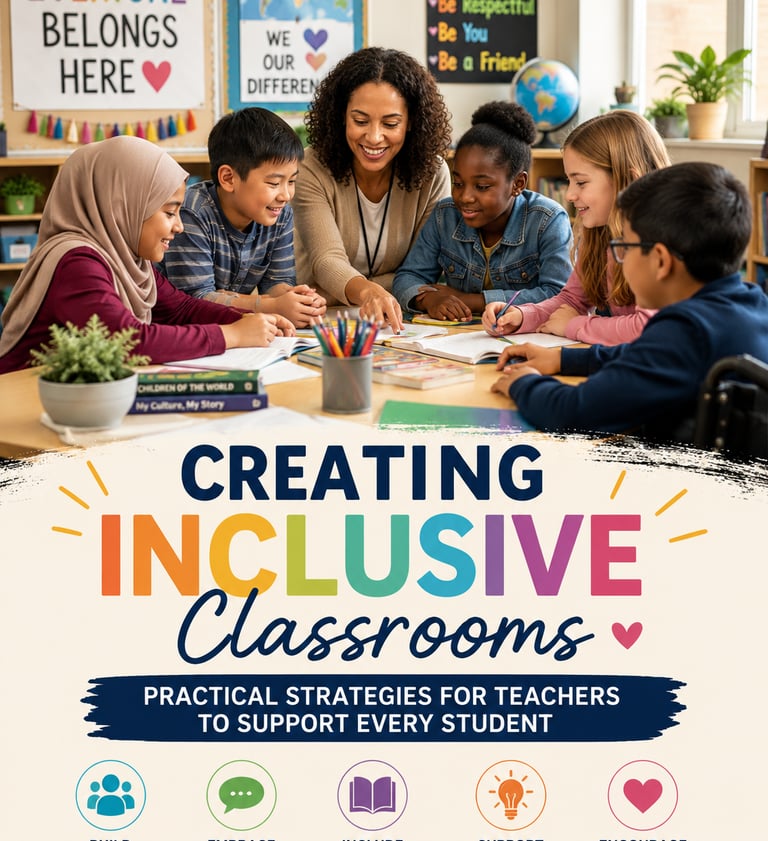
Walk into almost any classroom today and you will see students from different cultures, backgrounds, learning abilities, languages, and life experiences learning side by side. Diversity in schools is growing every year, and while this creates incredible opportunities for learning and connection, it can also create real challenges for teachers trying to meet every student’s needs.
Many educators want to build inclusive classrooms but feel overwhelmed by questions like:
How do I handle language barriers?
What if students exclude one another?
How can I make all students feel represented?
What if I unintentionally offend someone?
How do I manage different learning needs at once?
The truth is, no teacher gets it perfect. Inclusive teaching is not about being flawless. It is about being intentional, flexible, and willing to grow alongside your students.
Why Diversity Matters in Education
Research consistently shows that students benefit from learning in diverse classrooms. Students exposed to different perspectives often develop:
stronger critical thinking skills,
greater empathy,
better communication abilities,
and stronger preparation for the real world.
But diversity only becomes a strength when students feel safe, respected, and included.
Start With Classroom Belonging
One of the biggest mistakes schools make is assuming belonging happens automatically. It does not.
Students who feel ignored, stereotyped, or disconnected often struggle academically and socially. Teachers can help by intentionally building classroom community from the very first day.
Simple strategies include:
learning correct name pronunciation,
creating classroom agreements together,
encouraging respectful discussion,
and making sure every student’s voice is heard.
Even small daily interactions matter.
Review Your Classroom Materials
Many students quietly notice when they never see themselves represented in books, posters, examples, or classroom discussions.
Take time to examine:
classroom books,
historical examples,
visuals on the wall,
writing prompts,
and discussion topics.
Ask yourself:
Do students from different cultures appear here?
Are different family structures represented?
Do students with disabilities see themselves included?
Are multiple perspectives included?
When students feel seen, engagement often improves dramatically.
Supporting English Language Learners
English Language Learners may understand concepts well while still struggling to express themselves in English. This can sometimes be mistaken for low ability, which can damage confidence.
Teachers can help by:
using visuals,
modeling directions,
providing sentence starters,
allowing peer collaboration,
and giving students multiple ways to demonstrate understanding.
Remember: bilingualism is a strength, not a weakness.
Managing Different Learning Needs
Today’s classrooms include students with ADHD, autism, dyslexia, anxiety, processing disorders, and other learning differences. Trying to support everyone can feel exhausting.
One helpful approach is using flexible instruction:
visual learning,
hands-on activities,
group discussion,
audio supports,
and choice-based assignments.
Often, strategies that support struggling learners improve learning for the entire class.
Partner With Families Early
Sometimes families from diverse backgrounds may feel hesitant about school communication, especially if they previously had negative educational experiences.
Do not wait until there is a problem to connect.
A simple positive message home can build trust quickly:
compliment effort,
share student strengths,
or celebrate improvement.
Strong teacher-family relationships often reduce misunderstandings and improve student confidence.
Difficult Moments Will Happen
At some point:
a student may say something insensitive,
a cultural misunderstanding may occur,
or a student may feel excluded.
These moments are uncomfortable, but they are also opportunities for growth.
Instead of reacting immediately with punishment, many teachers find it more effective to:
pause the conversation,
guide respectful discussion,
ask reflective questions,
and reinforce classroom expectations.
Students learn inclusion not only from lessons, but from how adults respond during difficult moments.
Conclusion
Teaching in a diverse classroom can sometimes feel challenging, emotional, and even overwhelming. But it can also become one of the most rewarding parts of education.
Students do not need perfect teachers. They need teachers who are willing to:
listen,
learn,
adapt,
and continue growing.
An inclusive classroom is not built in one lesson or one activity. It is built through consistent daily choices that tell every child: “You belong here.”